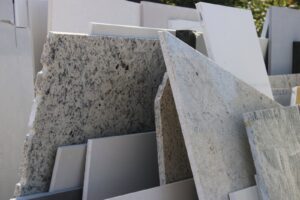
Granite countertop repair is usually simpler than homeowners expect. Most small chips, edge dings, and surface pits can be filled with a stone-rated epoxy or clear adhesive, leveled with a razor blade, and polished so they are hard to spot. Cracks need a closer look: a fine, stable hairline crack can be filled, but a crack that moves, changes height, or runs through a sink cutout or seam needs a professional. This guide walks through how to tell the difference, the tools to use, and the exact steps for each type of damage, based on what we see in kitchens across Lewisville, Carrollton, Plano, and the rest of Dallas–Fort Worth.
Quick answer: can a chipped or cracked granite countertop be repaired?
Yes, in most cases. Use this as a starting point:
- Small chip (smaller than a dime): a good DIY repair with clear or color-matched stone epoxy.
- Edge or corner chip: repairable. If you saved the broken piece, it can often be glued back in place.
- Pits and natural fissures: often normal features of the stone. Pits can be filled; fissures usually just need sealing.
- Hairline crack that does not move: can be filled with a thin, low-viscosity epoxy.
- Crack that is uneven, wide, growing, or near a seam or sink: call a professional, since the stone or the cabinet support underneath may be the real problem.
Chip, crack, pit, or fissure? Identify the damage first
Look at the area under bright, angled light, and run a fingernail across it.
- Chip: a piece of stone has broken away, usually along an edge, around the sink, or where heavy pans land. Your fingernail catches in a small crater.
- Crack: a break line through the stone. If one side sits higher than the other, or the line opens when you press nearby, the slab is moving.
- Pit: a tiny void in the surface where a mineral crystal fell out. Pits are common in granite and are not a sign of a defect.
- Fissure: a natural vein-like line that formed in the stone. Your fingernail does not catch on it, and it does not change height. Fissures are an accepted characteristic of natural granite and do not weaken the countertop.
Also measure the damage and note where it is. Chips smaller than a dime and cracks shorter than about two inches that stay level usually respond well to at-home repair. Damage near a cooktop, sink, or seam deserves extra caution, because heat, water, and joints put more stress on those areas.
Tools and materials for granite countertop repair
- Stone-rated epoxy (clear, or a kit with color tints) or a clear cyanoacrylate adhesive made for stone
- Color-matching tints or granite filler powder, if the chip is in a dark or busy pattern
- Acetone or denatured alcohol and lint-free cloths
- Single-edge razor blade and a plastic putty knife or scraper
- Painter’s tape (to protect the surrounding stone and to build a dam on edges)
- Fine sandpaper or polishing pads (400 grit and finer) and a stone polish
- Granite sealer for the finishing step
Always follow the product label for mixing, ventilation, and cure times, and test any tint on a hidden area or a scrap before using it on the visible surface.
How to repair a chip in a granite countertop, step by step
- Clean the chip. Wipe the area with acetone or denatured alcohol to remove grease, soap film, and old sealer, then let it dry completely.
- Tape around it. Mask the stone around the chip so excess adhesive does not dull the surrounding polish.
- Mix and tint. Mix a small amount of epoxy. If needed, add tint a little at a time until it matches the background color of the stone. Clear adhesive often blends best in speckled granite.
- Fill slightly high. Press the filler into the chip with the scraper to push out air bubbles. Leave it a little proud of the surface. For deep chips, build it up in thin layers and let each one set.
- Let it cure. Give it the full time on the label before you touch it.
- Shave it flush. Hold a single-edge razor blade nearly flat and carefully shave the extra material until it is level with the countertop.
- Polish and seal. Buff with fine polishing pads, then apply sealer to the area so the repair and the surrounding stone have the same sheen.
How to repair a chipped granite countertop edge or corner
Edges take the most impact in daily use, and edge chips are the most common granite repair we hear about. If you still have the broken piece, clean both surfaces, apply a thin coat of clear stone epoxy, press the piece into place, and hold it with painter’s tape until it cures. Then shave off any squeeze-out and polish.
If the piece is lost, put a strip of painter’s tape under and around the edge to act as a dam. Build the missing area up with tinted epoxy in thin layers, let it cure, and then shape it with a razor blade and fine sandpaper to follow the original edge profile. Rounded profiles such as eased, bullnose, and half-bullnose resist chipping better than sharp square corners. Our guide to granite edge profiles explains the trade-offs if you are choosing a new edge.
How to repair cracks in granite countertops
For a hairline crack that stays level, clean the line with acetone and let it dry. Apply a thin, low-viscosity clear epoxy along the full length so it wicks into the crack, then wipe the excess right away. After it cures, shave it flush and polish. Do not press hard on the slab while you work, and do not try to force a crack closed.
Stop and call a professional if the crack is wider than a hairline, if one side is higher than the other, if it keeps growing, or if it runs from a sink cutout, cooktop, or seam. Those cracks usually mean the slab is not fully supported. Common causes are a cabinet that has shifted, missing support around an undermount sink, or stress from heat. Filling the surface will not fix that cause. If you are planning new tops, our article on countertop templating and installation shows how proper support is built in from the start.
How to fill pits in a granite countertop
Pits are small, so the repair is quick. Clean the pit, place a drop of clear stone adhesive into it, let it cure, and shave it flush with a razor blade. Then polish the spot lightly. Keep in mind that some pitting and natural fissures are normal in granite. If the surface feels smooth and the stone is sealed, many homeowners simply leave them alone.
DIY repair or professional granite repair?
A DIY repair makes sense for small chips, pits, and stable hairline cracks in an area you can work on comfortably. Bring in a professional when:
- Damage spans several areas or a large section of the edge
- A crack is uneven, widening, or near a seam, sink, or cooktop
- The countertop has a polished, dark, or highly patterned surface where an imperfect color match would stand out
- The damage points to a support or installation problem underneath
Professionals have color-matching systems and polishing equipment that give more seamless results. When the damage is extensive or the stone is near the end of its life, replacing the top can be the better long-term value. Our granite and quartz countertops page covers new granite and other stone options.
Seal and maintain the countertop after a repair
Once the repair has fully cured, seal the area, and the whole countertop if it is due, so the repair and the original stone resist stains the same way. Clean with pH-neutral products and avoid abrasive pads that dull the polish. Our natural stone countertop maintenance schedule lays out what to do weekly, monthly, and yearly.
How to prevent future chips and cracks
- Use cutting boards and trivets, and avoid setting heavy cast iron down hard near edges.
- Do not stand, sit, or kneel on the countertop, especially near a sink cutout or an overhang.
- Use soft-close drawers and doors so slamming does not jar the stone.
- Place a mat in the sink so heavy pots do not strike the rim.
- Keep the stone sealed so small pits and fissures do not collect grime.
If you are still deciding on a countertop material, compare durability in our quartz vs. granite guide for busy families or our granite vs. marble comparison. For a larger update, see Kitchen Remodeling in Carrollton or our Plano, TX service details.
FAQ
Can a chipped granite countertop be repaired?
Yes. Most chips can be filled with a stone-rated epoxy or clear adhesive, shaved flush with a razor blade, and polished. If you saved the broken piece from an edge chip, it can often be glued back in place.
Can a cracked granite countertop be repaired?
Stable hairline cracks can be filled with a thin clear epoxy. Cracks that are uneven, growing, or near a seam, sink, or cooktop should be checked by a professional, because they often point to a support problem under the stone.
Can I use super glue on a granite chip?
Clear cyanoacrylate adhesives made for stone work well for small chips and pits. Regular household super glue can yellow or stay brittle over time, so a product labeled for stone or countertop repair is a better choice.
How long does a granite countertop repair take to cure?
It depends on the product. Some stone adhesives cure in minutes, while most epoxies need several hours to set and longer to reach full hardness. Follow the label, and avoid heavy use of the area until the repair has fully cured.
Are pits and fissures in granite normal?
Yes. Small pits and natural fissures are common characteristics of natural granite and do not weaken the countertop. Pits can be filled if they bother you, and fissures generally just need to stay sealed.
Will the repair match the color of my granite?
A close match is usually possible with clear adhesive or careful tinting, though a slight difference can remain. Test the color on a hidden spot first, and consider a professional for highly visible areas.
Do I need to seal granite after a repair?
Yes. Sealing the repaired area, or the full countertop if it is due, helps the repair and the original stone resist stains and keeps the finish consistent.
Have a damaged countertop or thinking about new granite? Call A1 Flooring and Granite at (214) 441-7795 or request an estimate to talk through options for your Lewisville, Carrollton, or Plano kitchen.
If this is still a planning read, how to pick hardwood and granite vs quartz cover the two choices people ask about most. Ready to move? Request a quote.